
Personal brand · From the archive
What founders can learn from Zendaya's camera preparation
Practise explaining the business before the high-stakes interview. Record a short answer, watch it back and make one concrete improvement at a time. FAME's Zendaya archive shows preparation and positioning at an early stage; the useful founder lesson is to build the skill before the attention arrives.
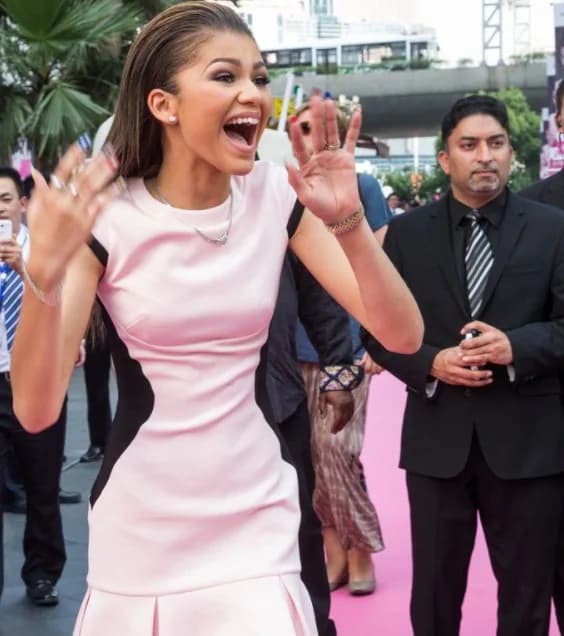
People see the finished interview and call the speaker a natural. They rarely see the repetitions that made the answer sound that simple.
FAME's archive includes on-camera coaching with Zendaya and an account from her father and manager, Kazembe Coleman, of the early positioning work. It is a record of preparation. For a founder, that is the part worth studying: can you explain what you are building clearly when somebody puts a camera in front of you?
Read the case at the right scale
The archive documents early work with Zendaya, including rehearsed presentation and international appearances. Kazembe describes the role he believes Sheeraz played in making her position understood. His account is a family testimony, and the coaching clips let the viewer inspect a specific part of the work.
A founder does not need to copy an entertainer's career. Nor should a case be stretched into a claim that one adviser caused all of a person's later success. The transferable lesson here is narrower and more useful: preparation makes it easier for an audience to understand qualities that are already present.
That changes the brief. Instead of asking a production team to make you look impressive, ask it to help the audience understand the decision, experience or product that gives you something worth saying.
Source: Zendaya: Kazembe Coleman's account and coaching footage
Rehearse the answer your buyer needs
Choose a question a real customer would ask. What does your company do? Why did you build it? What changes for the customer? What have you learned from doing the work? Answer one question at a time, in ordinary language.
Record sixty seconds on a phone before arranging a full shoot. Watch it with the sound on, then read a transcript. You may discover that the first twenty seconds are background your audience does not need, or that the useful explanation starts only after the polished introduction.
Keep the detail that proves you understand the work. A specific customer problem, a design decision or an operating constraint gives the answer substance. Broad claims about passion and innovation are difficult to remember because they could come from almost anyone.
Change one thing on each take
Trying to fix posture, vocabulary, pace, eye line and the whole story in one attempt creates a stiff performance. Pick the most important problem first. Perhaps the answer is too long. Perhaps it contains five unexplained technical terms. Perhaps it never says who the product is for.
Make the correction, record another take and compare them. Keep the version that is easiest to understand. The point of rehearsal is to make the thought clearer, rather than to memorise a perfect sequence of words.
Ask a colleague outside your speciality to repeat what they heard. If they describe a different offer from the one you intended, the message still needs work. A colleague saying ‘you looked good’ is pleasant feedback, but it does not test comprehension.
- One buyer question per answer
- One specific example that supports the point
- One improvement to test on the next take
- A listener who can explain the message back to you
Prepare for the question you would rather avoid
Founders often practise their opening and leave the difficult questions untouched. What is not ready? Why is the product expensive? What happened when a previous plan failed? Which claim can you actually prove? Prepare honest answers while you have time to think.
This does not mean turning every interview into a defensive exercise. It means knowing the boundaries of your knowledge and the facts you can discuss. A clear ‘we have not measured that yet’ is more useful than an invented number that later becomes the headline.
For a media appearance, clarify the format and likely subject beforehand. For a recorded brand film, agree the purpose of the footage and how it will be used. Preparation should fit the actual setting; a product explanation and a live discussion require different rhythms.
Make the practice useful beyond the shoot
Save the strongest answers with their questions and source facts. They can inform the founder's website, a sales introduction or a press interview brief. Keep the natural language that made the explanation work instead of rewriting it into corporate language at the last minute.
Over time, build a small library of answers to the questions that repeatedly arrive. Revisit it when the product or company changes. The founder should sound like the same person across a meeting, a video and the website, even when each format has a different length.
The next time the spotlight arrives, the team should already know what the founder needs to communicate. That is a more useful ambition than hoping the camera will create confidence on the day.
Sources & context
This article applies recorded experience to a practical business question. The recommendations are FAME Team analysis; attributed statements and historical examples are linked below.
- Zendaya: Kazembe Coleman's account and coaching footageFAME's owned archive