
AI visibility · The founder's audit
What does ChatGPT say about your company?
Start with the answer a potential customer would see. Check whether it identifies the right company, describes your work accurately and points to evidence. Record the question and sources before you change anything. You need a baseline you can compare, not one flattering screenshot.
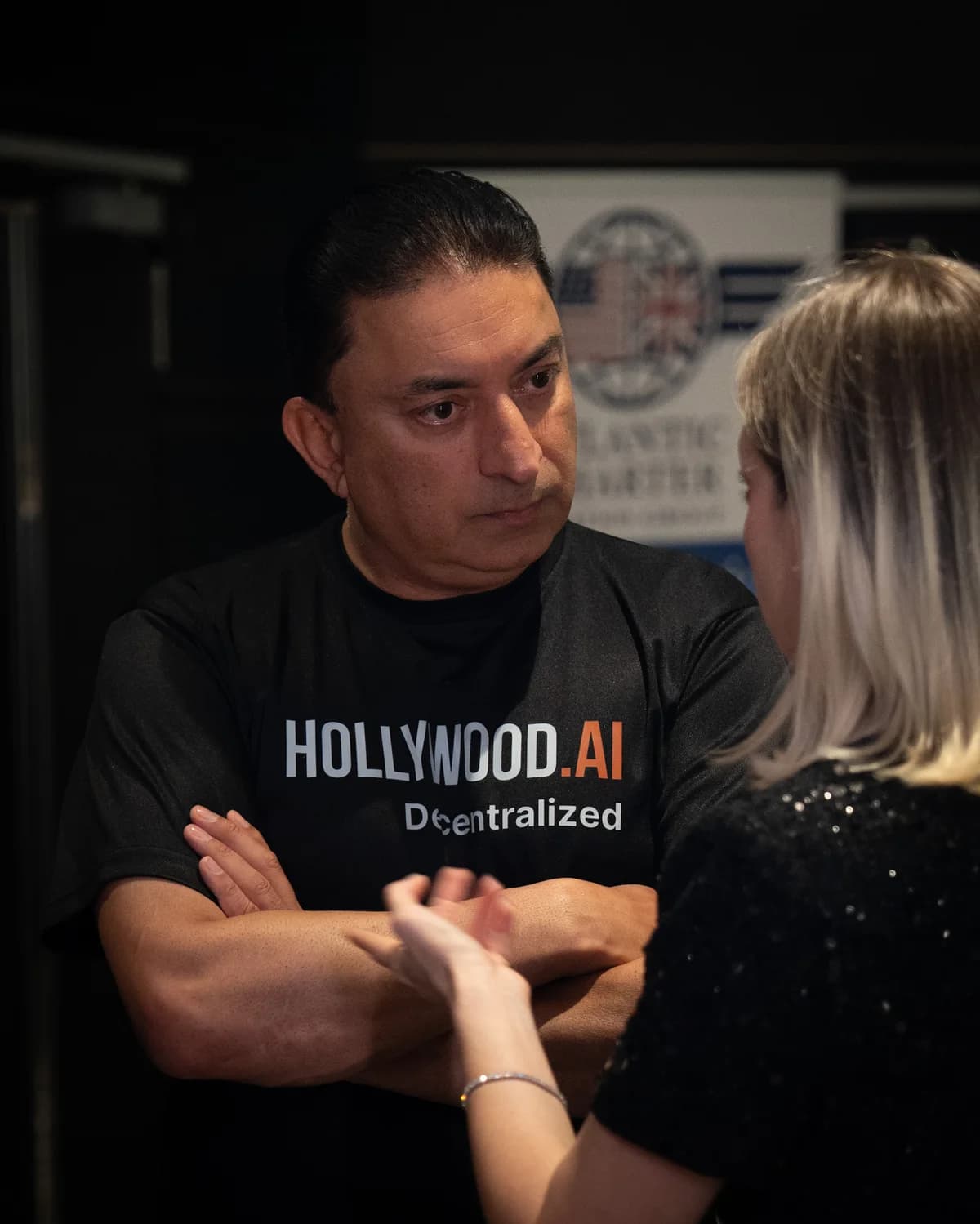
In his 2025 London Real interview, Sheeraz Hasan asks a blunt question: ‘what does GPT say about you?’ His point is that the public impression of a person increasingly forms before the conversation starts. A founder can walk into a meeting with a strong pitch while the person opposite has already encountered an incomplete version of the story.
That observation gives a business a useful job to do. Find the gap between the company you actually run and the company someone can discover. The audit below is FAME's practical way to approach that job.
Ask the questions a buyer would ask
Begin with your name and company. Then move to the problem you solve, the market you serve and the decision a buyer is making. These are different tests. An assistant that can repeat your biography may still offer little help to someone comparing your service with alternatives.
For a specialist consultancy, a useful sequence is: What does this company do? Who is it suitable for? What evidence supports its experience? What should I ask before hiring it? Keep the wording natural. A question that already names you as the best option tells you very little about genuine discovery.
- Check the exact company and founder names, including common spelling variations.
- Ask one question about the buyer's problem without including your brand.
- Ask for evidence and follow the cited links.
- Keep the platform, date, market and exact wording with each answer.
Source: London Real: Sheeraz Hasan on fame, founders and AI (2025)
Read the sources, not just the answer
An answer can sound convincing and cite a page that supports only part of it. Open the sources. Is the quoted role current? Is the company in the right country? Does a claim about a client come from a real case study or an unrelated photo caption? Trace the important statements back to something you can inspect.
Keep separate records for a factual error, an omitted fact and a missing recommendation. The first may have a clear correction. The second may reveal weak public documentation. The third is a competitive discovery problem and cannot be solved by insisting that an assistant recommend you.
A missing citation is also different from a missing mention. If the assistant names your company without a link, that is visibility, but it is not a measurable referral to your website.
Fix the information you actually control
Make the company website the clearest explanation of the business. State the offer, intended customer, location, people responsible and evidence of completed work. Give each important service enough substance for someone to understand it without a sales call. A polished home page cannot carry every buyer question.
If the founder biography, LinkedIn description and company site contradict one another, reconcile them. If an old external profile contains a factual error, send the publisher a specific correction with evidence. Publishing twenty new biographies around the same contradiction will make maintenance harder.
Technical access matters too. Google's guidance connects AI search visibility to normal search foundations and useful original information. OpenAI documents OAI-SearchBot separately from its training crawler. Ask your technical team to verify access, indexing and canonical URLs, without treating a crawler setting as a promise of inclusion.
Source: Google Search Central: generative AI search guidance; OpenAI: search and training crawlers
Give the audit an owner and a next action
Turn each finding into a small, verifiable task. ‘Improve our AI presence’ is too vague. ‘Correct the former job title on the About page and ask the publisher to update its profile’ has an owner and an observable finish.
Here is a hypothetical audit row: the assistant describes a Dubai company as operating only in London, citing an old announcement. The first action is to make the current locations clear on the company site. The second is to request an update from the source owner. The follow-up is to repeat the same test and record what changed. Do not mark the AI answer fixed just because the website edit is finished.
| Finding | Useful next move |
|---|---|
| Wrong identity or role | Correct the authoritative public record and source links |
| Vague description of the offer | Explain the actual service, buyer and scope |
| Unsupported success claim | Remove it or publish attributable evidence |
| No relevant buyer answer | Write the missing explanation where customers can use it |
Measure what happens after discovery
Repeat a consistent set of questions over time. Answers vary, so record changes across several observations rather than declaring victory after one favourable response. Track cited pages, relevant referral visits and the enquiries those visits produce.
The strongest commercial signal is a suitable prospect arriving with a better understanding of your work. Ask which page or source helped them, and keep that answer alongside the enquiry. A mention, a visit, a booked call and a paid engagement are four separate events. Your report should make those differences easy to see.
Sources & context
This article applies recorded experience to a practical business question. The recommendations are FAME Team analysis; attributed statements and historical examples are linked below.
- London Real: Sheeraz Hasan on fame, founders and AI (2025)Recorded interview
- Google Search Central: generative AI search guidanceOfficial platform guidance
- OpenAI: search and training crawlersOfficial platform guidance